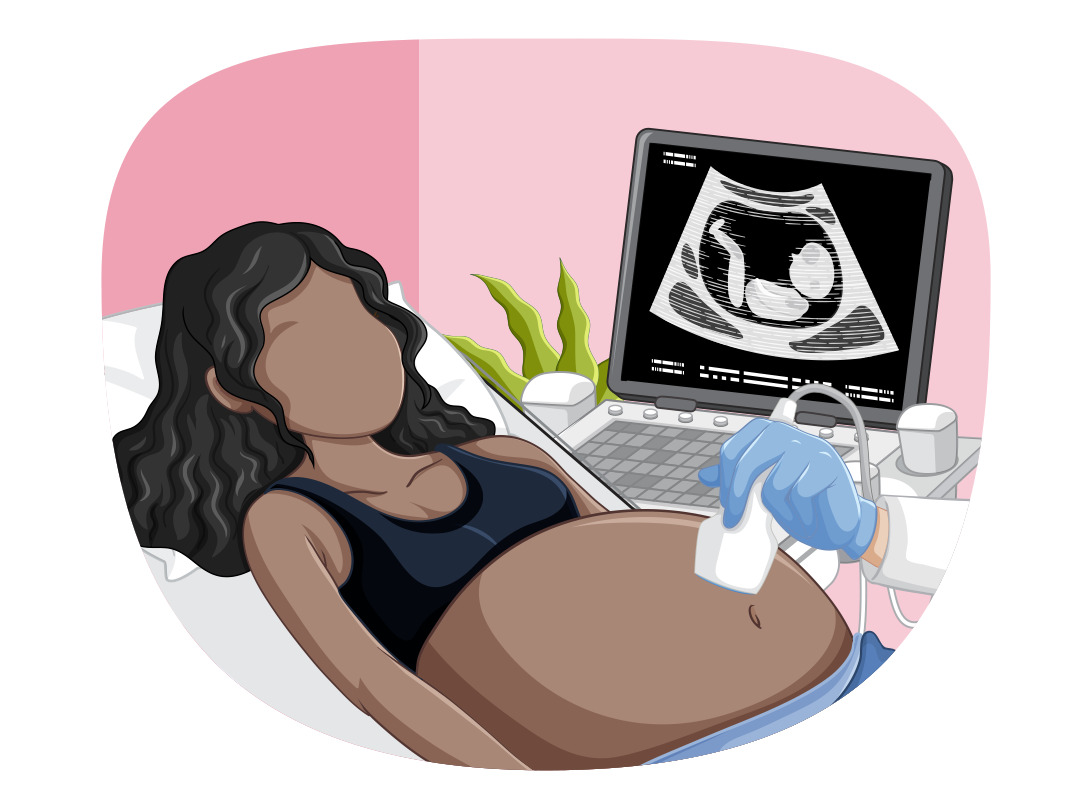
At Obstetric Care, we provide early pregnancy assessments that blend medical expertise with compassionate, personalised support. Whether you are looking for reassurance, confirmation of dates, or help interpreting early symptoms, an early pregnancy visit can give you the information and peace of mind you need during this important stage.
Below, we explain what early pregnancy scans involve, when they are typically performed, what they can show, and why they are such a valuable part of early antenatal care.
What Is an Early Pregnancy Scan?
An early pregnancy scan (sometimes called a viability scan, dating scan, or reassurance scan) is an ultrasound performed during the first trimester - usually between 6 and 11 weeks of pregnancy.
Unlike the routine dating scan offered around 11-14 weeks, early scans provide an earlier look at how your pregnancy is developing.
These scans are particularly useful for women who:
- Want early reassurance
- Are unsure of their conception or cycle dates
- Have experienced previous miscarriage or ectopic pregnancy
- Have symptoms such as abdominal pain or bleeding
- Are undergoing fertility treatment and need early monitoring
- Are carrying risk factors that require closer observation
Early pregnancy scans can be performed trans-abdominally or trans-vaginally (internal). A transvaginal scan is completely safe in early pregnancy and often provides clearer detail during the earliest weeks.
When Should You Have an Early Pregnancy Scan?
The best time for an early pregnancy scan depends on what information you need:
Around 6 Weeks
- Confirms presence of a gestational sac
- Confirms location of pregnancy (important for ruling out ectopic pregnancy)
- May detect a yolk sac
- May detect a heartbeat (though sometimes it is still too early)
7 to 8 Weeks
- Clearer visualisation of the embryo
- More reliable detection of heartbeat
- Improved accuracy when confirming dates
- Allows assessment of early growth
9 to 10 Weeks
- Fetal pole and heartbeat clearly visible
- Improved accuracy when confirming dates
- Can identify singleton vs. twin pregnancy
- Useful if previous scans were inconclusive due to early timing
Learn: Twin Pregnancies - How Care Differs for Multiples
What an Early Pregnancy Scan Can Show
An early pregnancy scan provides several key pieces of information:
1. Confirmation of Pregnancy
The scan identifies:
- A gestational sac
- A yolk sac
- Presence of an embryo
- Presence of cardiac activity
This information confirms that the pregnancy is developing inside the uterus as expected.
2. Location of Pregnancy
Ultrasound can show whether the pregnancy is:
- Intrauterine (inside the womb)
- Ectopic (implanting outside the womb)
An ectopic pregnancy can be life-threatening if untreated, so early detection is extremely important, particularly if you have symptoms such as shoulder-tip pain, abdominal pain, or vaginal bleeding.
3. Viability
A "viable pregnancy" means the embryo is growing as expected with a detectable heartbeat.
This can be especially reassuring for women who have experienced miscarriage before.
4. Estimated Gestational Age
By measuring the embryo and gestational sac, the scan can:
- Estimate the approximate gestational age
- Suggest an expected due date
- Clarify dates when cycles are irregular or unknown
This is particularly helpful for women who don't track their cycle or who conceive shortly after stopping contraception.
Learn: Gestational Diabetes - Managing Your Health with Diet and Lifestyle Changes
5. Number of Babies
An early scan can confirm whether you are expecting:
- A single baby
- Twins
- A higher-order multiple pregnancy
It also helps identify whether twins are:
- Dichorionic (separate placentas and sacs)
- Monochorionic (sharing a placenta)
This is important because monochorionic pregnancies require closer monitoring later on.
6. Early Development
Your scan can check:
- The size of the embryo
- Early structures (gestational sac, yolk sac)
- The shape and position of the sac
- Presence of cardiac activity
This information helps your clinician evaluate whether the pregnancy is progressing normally.
What an Early Pregnancy Scan Cannot Show
Early pregnancy scans are highly informative, but it’s equally important to understand their limitations:
They cannot screen for chromosomal conditions
Conditions such as Down’s syndrome cannot be detected this early. Screening normally takes place at the nuchal translucency scan around 12 weeks or via NIPT testing from 10 weeks onwards.
They cannot assess anatomical development
Major fetal anatomy becomes visible later in pregnancy. The early anomaly scan is performed around 11-14 weeks and a detailed anomaly scan is performed around 20 weeks.
They may not always detect a heartbeat before 6-7 weeks
This is completely normal and often just means the scan is too early.
What to Expect During an Early Pregnancy Scan
Most early pregnancy scans follow a simple and comfortable process:
1. Medical History Review
Your clinician will ask about:
- Your last menstrual period
- Cycle regularity
- Any symptoms (pain, bleeding, nausea)
- Any previous pregnancies or losses
- Any relevant medical conditions
This ensures the scan is tailored to your needs.
2. The Scan Itself
You may have:
Trans-abdominal scan
- Gel is applied to the abdomen
- The ultrasound probe glides across your stomach while the bladder is full
- Provides a general overview
Trans-vaginal scan
- A slim, sterile probe is gently inserted into the vagina, while the bladder is empty
- This offers much clearer early-pregnancy images
- Safe, comfortable, and routinely used from 6 to 9 weeks
Your clinician will talk you through what they see and explain each stage in a clear, reassuring way.
3. Results and Explanation
After the scan, you will receive:
- A clear explanation of findings
- Measurements and early dating
- Confirmation of heartbeat (if visible)
- Guidance on next steps
- Answers to any questions you may have
Most women leave feeling informed, reassured, and more confident about the weeks ahead.
Early Pregnancy Scans and Symptoms - When Should You Seek Help?
You should contact a healthcare professional promptly if you experience:
- Severe abdominal or pelvic pain
- Vaginal bleeding
- Pain in the shoulder tip
- Dizziness or fainting
- Intense one-sided low abdominal pain
- A history of ectopic pregnancy and new symptoms
These may require an urgent early scan to rule out complications.
How Obstetric Care Supports You During Early Pregnancy
At Obstetric Care, our approach to early pregnancy care is centred on 5 key points:
- Careful assessment of symptoms
- Clear explanation of findings
- Compassionate, evidence-based support
- Tailored monitoring when needed
- A calm, reassuring environment at every step of early pregnancy
Whether your scan is for reassurance, dating, confirmation of viability, or symptom assessment, you can expect a balanced, honest, and supportive approach to your care.
Preparing for Your Early Pregnancy Scan
You don’t need much preparation, but these tips can help:
- Arrive a few minutes early to relax before your scan
- Drink some water beforehand (a comfortably full bladder can help trans-abdominal imaging)
- Wear loose, comfortable clothing
- Bring your pregnancy notes if you already have them
- Bring your partner or support person if you wish
Expect the appointment to last around 30 minutes, including discussion of results.
Your First Step in a Healthy Pregnancy Journey
Early pregnancy is a time of excitement, hope, and understandable uncertainty. An early pregnancy scan can offer clarity, reassurance, and expert guidance exactly when you need it most.
At Obstetric Care, our aim is to help you feel informed, supported, and confident from the earliest days of pregnancy through every stage that follows.
If you're considering an early pregnancy scan or want to discuss any early symptoms, we welcome you to get in touch for expert, compassionate support.