1. Your blood volume increases by up to 50%
One of the earliest and most dramatic shifts happens right in your bloodstream.
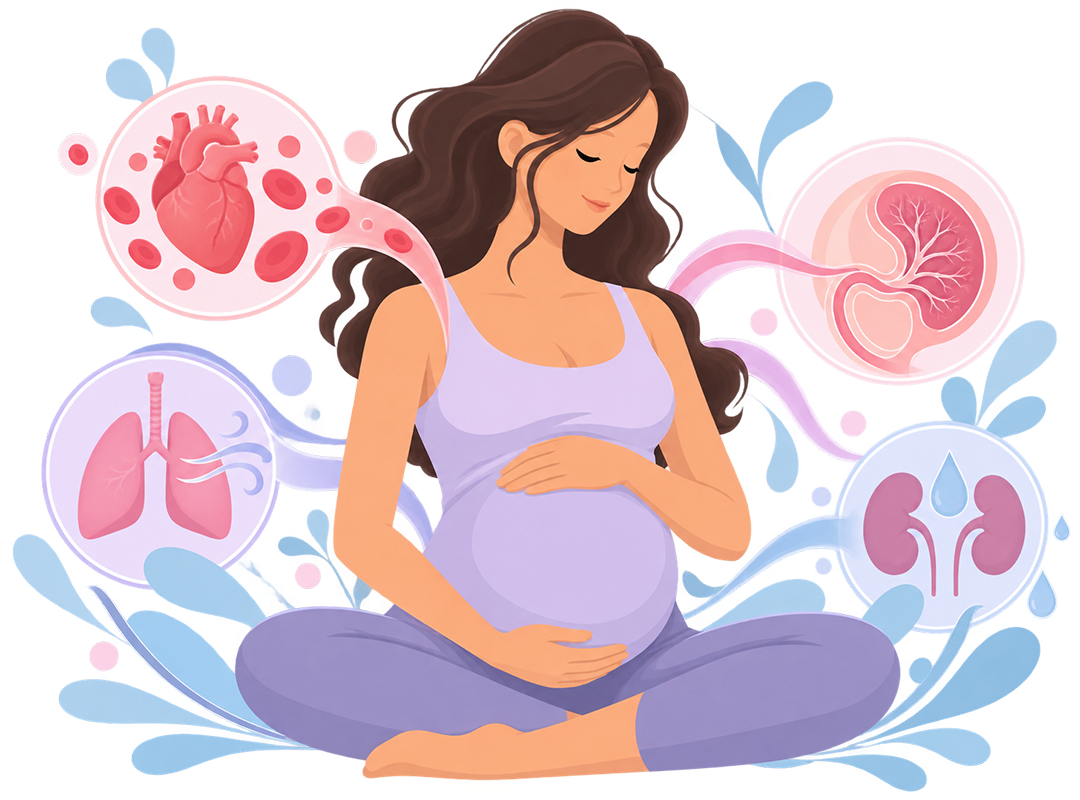
By your third trimester, your total blood volume will be around 40% to 50% higher than it was before you got pregnant. To achieve this, your body dramatically increases its production of plasma (the liquid part of your blood), while your red blood cell mass rises to match.
This extra blood is vital - it ensures a steady stream of oxygen and nutrients flows directly to the uterus, placenta, and your growing baby. However, because plasma increases faster than red blood cells, your blood becomes more diluted. This is why mild anaemia is so common during pregnancy.
At Obstetric Care, we track this closely through routine blood tests alongside your antenatal checks.
2. Your heart works overtime
With nearly 1.5 times as much blood circulating through your body, your heart has to step up.
Your cardiac output - the amount of blood your heart pumps every minute - rises significantly, and your resting heart rate increases too. If you notice your heart beating a little faster or find yourself getting tired from everyday activities, this is exactly why.
Because your cardiovascular system is working so hard, blood pressure monitoring is a cornerstone of every antenatal appointment. A sudden rise in blood pressure, especially alongside protein in your urine, can point toward pre-eclampsia. Regular checks ensure we detect and manage these changes early.
3. You grow a completely new organ
The placenta is the only temporary organ the human body creates, and it is a biological masterpiece.
Attached to the wall of your womb, the placenta serves as the vital gateway between your circulation and your baby’s. It allows oxygen and nutrients to pass safely from you to your baby while filtering waste products away. Interestingly, while your blood and your baby's blood come into incredibly close contact here, they never actually mix.
The placenta also acts as a hormone factory, producing the exact chemicals needed to maintain your pregnancy and prepare your body for birth. Once your baby is born, its job is complete, and it is delivered shortly afterward as the afterbirth.
4. Your uterus expands to 500 times its normal size
Before pregnancy, your uterus is roughly the size of a small pear and sits deep within your pelvis. Over nine months, its muscular walls stretch and expand to accommodate your baby, the placenta, and a generous amount of amniotic fluid.
As it grows upward and outward, it naturally shifts and presses against your internal organs. This structural shift is the direct cause of several classic pregnancy symptoms, from frequent bathroom trips (as it presses on the bladder) to heartburn (as it crowds the stomach) and breathlessness (as it pushes against your diaphragm).
5. Your kidneys filter at high speed
Your kidneys take on a massive extra workload to handle your increased blood volume and clear waste for both you and your baby.
In fact, the rate at which your kidneys filter blood (the glomerular filtration rate, or GFR) spikes significantly during a normal pregnancy.
Because your kidneys are processing so much extra fluid, urine testing is part of every single antenatal visit. Checking for protein in the urine allows us to screen for preeclampsia and ensure your kidneys are coping beautifully with the extra demand.
6. Your lungs and breathing adapt
You might find yourself sighing or catching your breath more often, even early in pregnancy. This is partly due to progesterone, a hormone that triggers your lungs to move more air in and out with every breath to maximise oxygen delivery.
Later on, the physical pressure of the uterus beneath your diaphragm adds to that winded feeling. While gradual, mild breathlessness is completely standard, any sudden or severe breathing difficulties require immediate medical evaluation.
7. Your immune system achieves a delicate balance
Genetically speaking, your baby is distinct from you. In any other scenario, your immune system would view these foreign cells as something to fight off.
To protect your pregnancy, your immune system undergoes a highly sophisticated recalibration. It selectively dampens specific responses so your body welcomes and nurtures the pregnancy, while keeping other defences sharp enough to protect you both from infections.
Partners in Your Pregnancy Journey
Pregnancy asks an incredible amount of the human body, and no two women experience these physiological shifts in exactly the same way.
At Obstetric Care, we look at the whole picture. Our role is to provide personalised, expert care that monitors these profound bodily changes, ensures your baby is developing normally, and gives you clear, calm, supporting guidance every step of the way.
If you would like to discuss your care or learn more about our specialist obstetric services, please reach out to our team today.