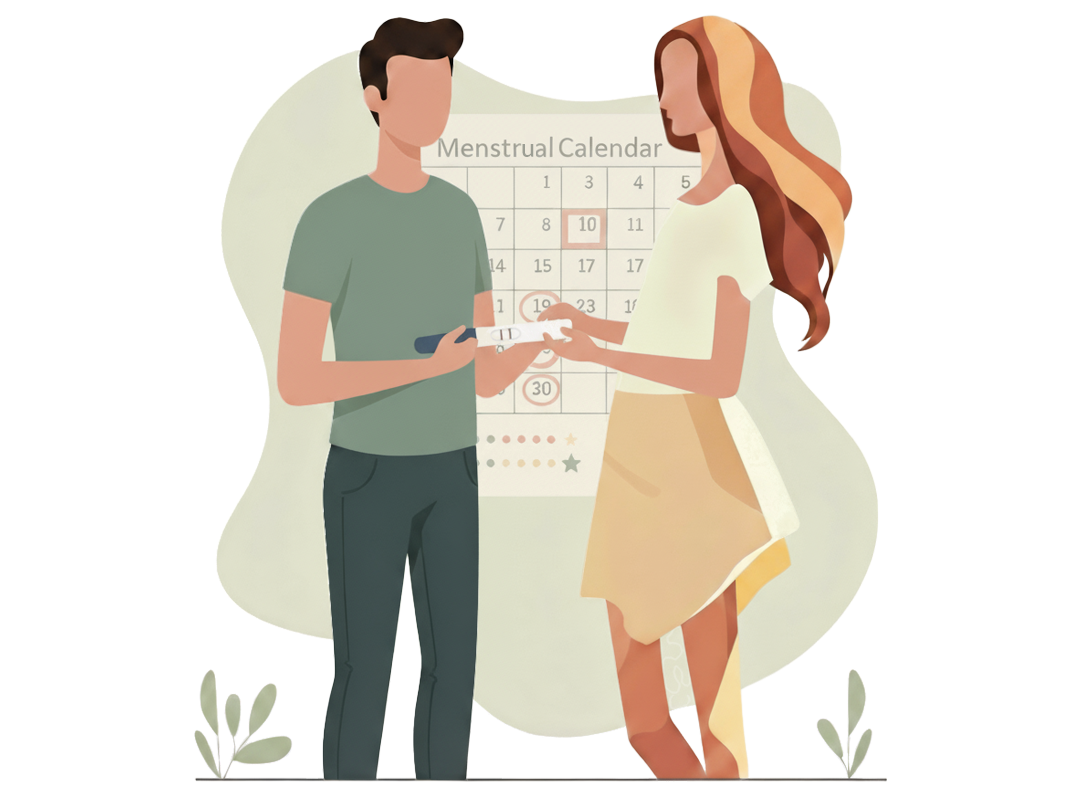
Understanding your menstrual cycle can empower you to take control of your reproductive health. By learning how your body changes throughout each month, you can better identify your fertile window, recognise any irregularities, and make informed choices about your health and wellbeing.
This guide will help you understand the stages of your menstrual cycle, how to recognise your fertile window, and the lifestyle factors that can enhance your chances of conception.
The Menstrual Cycle Explained
The menstrual cycle is a finely tuned hormonal process, typically lasting between 21 and 35 days, with an average of 28 days. It's controlled by the interaction of several hormones, including oestrogen, progesterone, follicle-stimulating hormone (FSH) and luteinising hormone (LH).
While every woman's cycle is slightly different, it's divided into four key phases:
1. The Menstrual Phase (Days 1 - 5)
This marks the beginning of the cycle. The lining of the uterus (endometrium) sheds, resulting in menstrual bleeding. Hormone levels are at their lowest, and the body begins preparing for a new cycle.
What's happening:
- Low oestrogen and progesterone trigger menstruation.
- FSH begins stimulating the growth of new ovarian follicles, each containing an immature egg.
Fertility insight:
This is not a fertile phase, but tracking the start of your period helps accurately predict ovulation later on.
2. The Follicular Phase (Days 1 - 14)
The follicular phase overlaps with menstruation initially and continues until ovulation. Rising oestrogen levels thicken the uterine lining, preparing it to support a fertilised egg.
What's happening:
- One dominant follicle matures under the influence of FSH.
- Oestrogen peaks just before ovulation.
Fertility insight:
Oestrogen surge causes cervical mucus to become clearer, thinner, and more slippery - a natural sign that ovulation is approaching. Monitoring this change can help you identify your fertile window.
3. The Ovulation Phase (Around Day 14 in a 28-Day Cycle)
Ovulation is the key event in the menstrual cycle - it's when a mature egg is released from the ovary and can be fertilised.
What's happening:
- A sharp rise in LH triggers ovulation.
- The egg travels down the fallopian tube, where it remains viable for around 12 - 24 hours.
Fertility insight:
This is your most fertile period. Sperm can survive in the female reproductive tract for up to five days, so having intercourse in the days leading up to and on the day of ovulation offers the best chance of conception.
You can track ovulation through:
- Ovulation predictor kits (OPKs) - detect the LH surge.
- Basal body temperature - a small rise indicates ovulation has occurred.
- Cervical mucus monitoring - clear, stretchy mucus resembling egg white signals peak fertility.
4. The Luteal Phase (Days 15 - 28)
After ovulation, the ruptured follicle becomes the corpus luteum, which releases progesterone to maintain the uterine lining.
What's happening:
- If fertilisation occurs, progesterone supports early pregnancy.
- If not, progesterone falls, triggering menstruation and the start of a new cycle.
Fertility insight:
A consistent luteal phase (typically 12 - 14 days) is a positive sign of hormonal balance. Shorter luteal phases may indicate issues such as luteal phase defect, which can affect implantation.
Read: Preconception Care - How to Prepare for a Healthy Pregnancy
Recognising Your Fertile Window
Your fertile window is typically the six days leading up to and including ovulation. Understanding when this occurs is key to improving your chances of conception.
For example:
- In a 28-day cycle, ovulation usually happens around day 14.
- In a longer 32-day cycle, ovulation might occur closer to day 18.
Tracking your cycle for several months can help identify patterns. Apps, ovulation kits, and fertility charting can be helpful, but combining these tools with personalised medical guidance provides the most accurate insight.
Factors That Can Affect Ovulation and Fertility
Even with regular cycles, some factors can disrupt ovulation or make conception more challenging.
1. Stress and Lifestyle
High stress levels can influence hormonal balance, potentially delaying ovulation. Incorporating mindfulness, relaxation techniques, and regular sleep can support a healthy cycle.
2. Weight and Nutrition
Both being underweight and overweight can affect hormone levels and ovulation. A balanced diet rich in whole foods, healthy fats, and key nutrients (such as folate, iron, and vitamin D) supports optimal fertility.
3. Age
Fertility naturally declines with age, particularly after 35. However, understanding your cycle and seeking early medical advice can help maximise your chances.
4. Medical Conditions
Conditions like polycystic ovary syndrome (PCOS), thyroid disorders, or endometriosis can impact cycle regularity and ovulation. These are areas in which professional evaluation is essential.
When to Seek Professional Advice
If you've been trying to conceive for 12 months (or six months if over 35) without success, it's advisable to speak to your GP or a fertility specialist. They can help assess your cycle patterns, hormone levels, and overall reproductive health to identify any underlying causes and recommend the most appropriate next steps.
Even if you're not yet seeking fertility treatment, understanding your cycle and maintaining a balanced lifestyle can help support your reproductive health and overall wellbeing.
Supporting Fertility Through Lifestyle and Diet
Small, sustainable changes can make a significant difference to your reproductive health:
- Eat a fertility-friendly diet: Include wholegrains, lean protein, fruit, vegetables, and foods rich in zinc and omega-3.
- Stay hydrated: Proper hydration supports cervical mucus quality.
- Limit alcohol and caffeine: Both can affect hormone regulation.
- Exercise moderately: Regular movement supports circulation and hormonal balance, but excessive training can disrupt ovulation.
- Avoid smoking: Smoking reduces fertility and impacts egg quality.
Read: New National Guidance on Maternal Nutrition, Pregnancy Weight, and Exercise
How Obstetric Care Supports Women's Reproductive Health
At Obstetric Care, our focus is on helping women understand their bodies and navigate each stage of their reproductive journey with confidence. By supporting hormonal health and providing evidence-based advice throughout pregnancy and beyond, our care approach promotes long-term wellbeing for both mother and baby.
We offer ongoing obstetric support and monitoring throughout pregnancy, as well as guidance on maintaining reproductive and hormonal health before, during, and after pregnancy.
Understanding Your Cycle, Empowering Your Fertility
Your menstrual cycle offers valuable insight into your fertility and overall reproductive health. By learning to recognise your body's natural patterns and working with healthcare professionals to interpret them, you can significantly enhance your chances of conceiving.
At Obstetric Care, we combine medical expertise with compassionate, personalised care to help women understand and manage their reproductive health at every stage. Our aim is to ensure you feel informed, confident, and supported throughout your pregnancy journey.
If you'd like to learn more about women's health or discuss any aspect of your pregnancy care, please don't hesitate to get in touch for professional, reassuring support.